




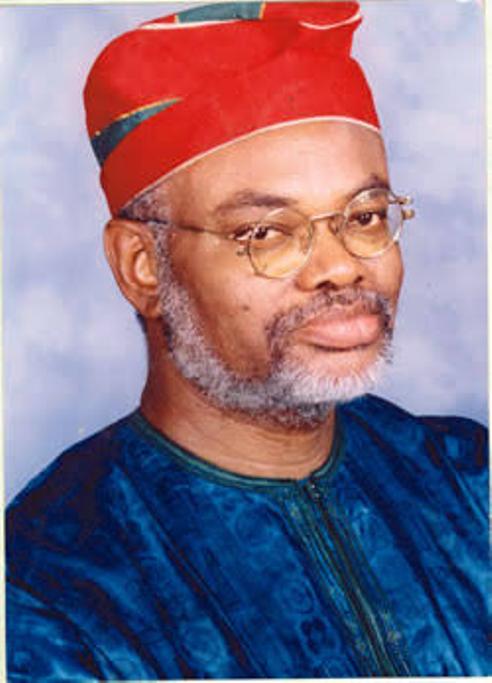
LAGOS AUGUST 3RD (NEWSRANGERS)-Twenty years after the assassination of one of Lagos’ most accomplished politicians, Nigeria is still searching for answers.
On the morning of July 27, 2006, Lagos awoke to shocking news. Olufunsho Williams—Engineer, Technocrat, Philanthropist and the Peoples Democratic Party (PDP)’s leading governorship aspirant for Lagos State—had been found dead in his Dolphin Estate residence in Ikoyi.
He was 58.
The killing sent shockwaves across Nigeria’s political landscape. Here was a man widely regarded as the PDP’s strongest chance of wresting Lagos from the Alliance for Democracy (AD), and later the Action Congress (AC), in the 2007 governorship election.
Just days before the party was expected to choose its flag bearer, Williams was brutally murdered in a horrific way.
Twenty years later, despite arrests, prosecutions, official investigations and even the involvement of Scotland Yard, one question refuses to go away:
Who killed Funsho Williams?
It remains one of Nigeria’s greatest political murder mysteries.
Born on September 9, 1948, Funsho Williams belonged to a generation of Nigerian public servants whose professional accomplishments preceded their political ambitions.
A graduate of Civil Engineering from the University of Lagos, he later obtained a Master’s degree from the New Jersey Institute of Technology in the United States. His career in the Lagos State Civil Service was remarkable.
Joining government service in 1974, Williams rose through the ranks over nearly two decades, supervising major infrastructure projects before retiring as a Permanent Secretary in 1991.
Even after retirement, successive administrations sought his expertise.
He served as Commissioner for Works under the military administration of Olagunsoye Oyinlola and later occupied influential positions on the boards of Julius Berger Nigeria Plc, Cappa & D’Alberto Plc, the National Maritime Authority and Ajaokuta Steel Company.
Those who knew him often described him as meticulous, disciplined and unusually modest for someone who wielded such influence.
Politics appeared to be a natural progression.
The Governorship dream was one Williams took seriously.
He initially aligned with the Alliance for Democracy before joining the PDP.
By 2003, he emerged as the PDP’s governorship candidate against incumbent Governor Bola Tinubu.
Although he lost the election, many political observers believed his strongest opportunity would come four years later.
By mid-2006, he was widely considered the front-runner for the PDP ticket ahead of the 2007 election.
That expectation ended violently.
Williams was found dead inside his residence after reportedly failing to keep scheduled appointments.
Investigators later established that he had been manually strangled.
During proceedings before a Lagos High Court in 2014, the then Lagos State Chief Forensic Pathologist, Professor Oladapo Obafunwa, testified that Williams died from asphyxia caused by manual strangulation.
The post-mortem also revealed injuries consistent with defensive wounds, suggesting he struggled fiercely against his attackers.
Nothing indicated that the killing was accidental.
Whoever carried it out appeared determined to ensure he did not survive.
The question immediately became why?
Was it a political assassination or an ordinary crime?
From the beginning, many Nigerians rejected the notion that the killing was merely a robbery gone wrong.
The timing raised obvious questions.
Williams was at the height of his political influence.
His emergence as PDP candidate and as an elected governor of Lagos State appeared increasingly likely.
His assassination therefore fuelled widespread speculation that politics may have been the motive.
The murder instantly generated numerous theories.
Some believed rivals within his own party wanted him eliminated.
Others suspected external political interests fearful of his growing popularity.
Still others argued that business relationships or personal disputes could not be ruled out.
None of these theories has ever been conclusively established.
Because Bola Tinubu was the sitting governor and the dominant political figure in Lagos, suspicion inevitably spread in political circles.
Some critics and political opponents openly pointed accusing fingers at him.
However, no evidence was ever linked to Tinubu as the murderer.
He consistently denied any involvement and publicly condemned the assassination.
His administration announced a ₦10 million reward for information leading to the arrest and prosecution of the killers, while then-President Olusegun Obasanjo approved the involvement of detectives from Scotland Yard to assist Nigerian investigators.
Even with international assistance, no definitive breakthrough emerged.
Arrests without closure took place.
Police eventually arrested several suspects.
Over the years, different names surfaced in connection with the investigation.
Some suspects reportedly confessed before later retracting their statements.
Others alleged coercion.
Six men were eventually prosecuted.
Yet the court proceedings failed to produce the kind of evidence that could settle public doubts about who ordered the killing, why it happened and who ultimately benefited.
The distinction between those who may have physically committed the murder and anyone who might have planned or financed it remained blurred.
As the years passed, public interest faded while legal proceedings dragged on.
Today, the assassination remains officially unresolved.
The cost of unsolved political murders is on the increase in Nigeria.
The country has witnessed several high-profile political assassinations.
From Attorney-General Bola Ige in 2001 to PDP chieftain Aminasoari Dikibo in 2004 and Funsho Williams in 2006, many politically significant murders have remained unresolved.
Such cases leave more than grieving families.
They weaken public confidence in criminal investigations.
They deepen suspicion about political competition.
They reinforce perceptions that influential interests can evade justice.
Each unsolved assassination also becomes a warning to future public servants that politics may carry deadly consequences without accountability.
At a memorial service marking the twentieth anniversary of his death, former PDP Deputy National Chairman Chief Bode George recalled discovering Williams’ body.
“We lost a gem,” he said, describing him as an icon of civility and a deeply humane individual.
George lamented that despite Scotland Yard’s participation, the investigation never delivered the answers Nigerians deserved.
Funso Doherty, governorship candidate of the Nigeria Democratic Congress (NDC), argued that Williams’ legacy transcends party politics.
According to him, the late engineer represented competence, transparency and integrity in public office—qualities increasingly scarce in contemporary politics.
Former Labour Party governorship candidate Gbadebo Rhodes-Vivour offered a simple but poignant tribute:
“We remember. Omoluabi Eko. Rest on Captain.”
Their words reflect a broader consensus.
Twenty years after his death, Funsho Williams is remembered less for partisan politics than for the promise many believed he embodied.
The questions that refuse to die are many.
Two decades later, investigators have not conclusively answered the questions that continue to haunt Nigeria.
Who entered Williams’ home?
Who strangled him?
Who planned the operation?
Who financed it?
Was the motive political, personal or commercial?
Did the investigation overlook crucial evidence?
Or does someone still know the truth but has never spoken?
Until those questions are answered, the assassination of Funsho Williams will remain unfinished business in Nigeria’s democratic history.
His death is no longer merely a criminal case.
It has become a symbol of the country’s struggle to guarantee justice, protect political actors and inspire confidence in the rule of law.
The mystery surrounding his murder continues to outlive many of the political battles that once defined it.
Twenty years on, Nigerians are still asking the same question they asked on that tragic July morning in 2006:
Who killed Funsho Williams?
Champion Newspers
For advertisement, events coverage, media consultancy, placement of publications and further enquiries please WhatsApp 2348023773039 or email: labakevwe@yahoo.com