






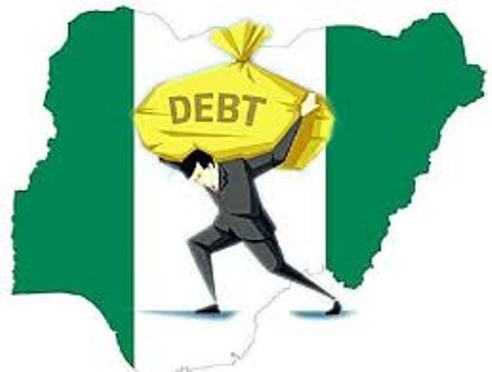
Nigeria has retained its position as the third-largest borrower from the International Development Association (IDA), the concessional lending arm of the World Bank, despite a slight decline in its debt exposure in the first quarter of 2026.
According to the IDA’s March 2026 financial statements, Nigeria’s exposure stood at $18.5 billion as of March 31, 2026, down marginally from $18.7 billion recorded at the end of December 2025.
The $200 million decline represents a 1.1 per cent reduction over the three-month period. However, on a year-on-year basis, Nigeria’s debt exposure increased significantly by $1.2 billion, or 6.9 per cent, from $17.3 billion recorded in March 2025.
The latest ranking places Nigeria behind Bangladesh and Pakistan among the World Bank’s largest IDA borrowers.
Data from the report showed that Bangladesh remained the largest borrower with an exposure of $22.7 billion, followed by Pakistan with $19.2 billion, while Nigeria ranked third with $18.5 billion.
Other major African borrowers include Ethiopia with $14.4 billion, Tanzania with $14.3 billion, and Kenya with $13.2 billion in outstanding exposure.
The report also revealed that the IDA’s total loans outstanding stood at $230.8 billion as of March 31, 2026, slightly below the $231.1 billion recorded at the end of December 2025, reflecting a mild moderation in the institution’s lending portfolio.
According to the IDA, loans classified under non-accrual status represented only 0.4 per cent of the total portfolio, while provisions for potential loan losses amounted to $6.3 billion, equivalent to about 2.0 per cent of underlying exposures.
Nigeria’s exposure accounted for roughly eight per cent of the IDA’s total loan portfolio and approximately 13.3 per cent of the combined exposure represented by the institution’s ten largest borrowing countries.
The IDA noted that its ten largest country exposures collectively accounted for about 60 per cent of total portfolio exposure as of March 2026, highlighting the concentration of concessional lending among a relatively small number of developing economies.
Despite the slight quarter-on-quarter decline, Nigeria’s debt profile with the World Bank continues to trend upward over the longer term.
The report showed that Nigeria’s exposure rose from $17.3 billion in March 2025 to $18.5 billion in March 2026, underscoring the country’s increasing reliance on concessional financing to support development priorities and economic reforms.
Similarly, Ethiopia’s exposure increased from $13.2 billion to $14.4 billion over the same period, while Tanzania’s exposure rose from $12.6 billion to $14.3 billion.
Bangladesh’s debt exposure climbed from $21.2 billion to $22.7 billion, while Pakistan’s increased from $18.3 billion to $19.2 billion. Ghana also recorded an increase from $7.1 billion to $7.4 billion.
Nigeria’s position among the top borrowers reflects the scale of its infrastructure, social investment, and reform financing needs under the World Bank’s concessional lending framework.
The Federal Government is also currently engaging the World Bank for additional financing support.
Daily Trust reports that Nigeria is seeking a fresh $1.25 billion World Bank facility aimed at expanding access to finance, improving digital services, strengthening electricity supply, and supporting reforms in tax administration, agriculture, and trade.
If approved, the proposed facility would raise total World Bank loan approvals secured under the administration of President Bola Ahmed Tinubu to about $10.6 billion in June 2023.
The proposed loan would also rank among the largest World Bank facilities approved for Nigeria in recent years, following the $1.5 billion Reforms for Economic Stabilisation to Enable Transformation Development Policy Financing approved in June 2024.
Experts had cautioned Nigeria against the rising multilateral loans especially amidst rising debt with Nigeria’s debt profile rising to N159 trillion as of 2025.
A finance expert and senior partner at SPM professionals, Dr. Paul Alaje recently noted that the current debt stock of the country is directly owned by Nigerians and will be paid by even citizens not yet born.
“So here is the point, as the volume increases, Nigeria has to pay more, mind you the debt they gave to us is not this year, but as of December 31 2025. So by the time we look at the one that we have retired and the new loans that have been approved and some that have been collected this year, it is clear that by the time the DMO is reporting that in the first quarter 2026, we would have crossed $160 billion. So it’s more of a burden on the economy. Whether we have the capacity to pay or not is a different kettle of fish,” he added.
DailyTrust
For media advert placement, events coverage, media consultancy, placement of publications and further inquiries please WhatsApp 2348023773039 or email: labakevwe@yahoo.com