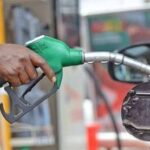




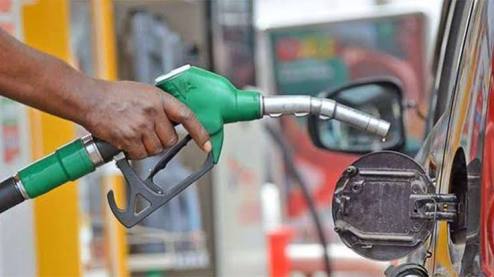
LAGOS NOVEMBER 10TH (NEWSRANGERS)-ABOUT 50 days after a presidential directive to state governors on Compressed Natural Gas (CNG) initiative and price discount by the Nigerian National Petroleum Corporation (NNPCL) on petrol, the twin policy appears to have failed in bringing down prohibitive transport fares and the general cost of living in the country.
A Nigerian Tribune survey across the country showed that the price modulation granted NNPC outlets had failed to bring envisaged relief to motorists and commuters, due to implementation crisis, even as a 30-day arrangement by NNPCL to forgo its retail profit margin ebbs.
Under a mutual agreement unveiled on September 19 by President Bola Tinubu, states were required to deploy CNG-powered buses to cushion the surging prices of petrol, caused by the subsidy removal and the United States-Iran conflict in the Middle East.
Some states that have rolled out CNG-powered buses include Lagos, Edo, Kano, Borno, Kwara, Ekiti, Plateau and Enugu, to help cut transport costs for residents.
Also, the Federal Government, on October 1, introduced a petrol price discount initiative to cushion the effects of escalating prices of the commodity and the increasing cost of living, particularly for commercial transport operators.
The intervention, part of President Tinubu’s efforts to cushion the rising cost of living, was expected to reduce transport operators’ expenses and translate into cheaper fares for passengers.
The government equally encouraged states to adopt CNG and electric-powered vehicles as cheaper alternatives to petrol-powered transportation.
While NNPCL introduced a N66-per-litre discount at its retail outlets from October 1, it subsequently announced the 30-day policy to forgo its retail profit margin and sell petrol at cost, with priority for public transport operators.
The President, also on September 19, asked governors to leverage savings from cheaper CNG-powered transportation to bring down the prohibitive rise in transport fares from October 1.
In an update on the National Affordable CNG Transit Programme, established after a meeting he held with governors on August 27, President Tinubu had explained that the overall objective was for more Nigerians to begin experiencing measurable reductions in transportation costs from October 1.
His words: “I encourage every state to maintain the momentum towards October 1. Work with transport unions and commercial operators. Support conversion and fleet deployment. Facilitate the infrastructure required. Above all, ensure that savings from cheaper energy reach Nigerian citizens through lower fares.”
The Nigerian Tribune, however, discovered at the weekend that motorists in most states, including Kaduna, Sokoto, Kebbi, Kano, and Zamfara, still buy petrol at exorbitant prices, despite the NNPCL discount directives.
The situation is exacerbated by a lack of awareness, restrictive registration conditions, app requirements, and reliance on old stock, preventing meaningful relief.
Coupled with this is the fact that most states are yet to acquire the fleet of CNG-powered mass transit buses promised to boost the relief package being implemented by the government.
Kaduna
In Kaduna, NNPCL still sells petrol for N1,410, despite the president’s order to reduce the pump price, as most commercial vehicle operators are not aware of the directive.
A visit to the NNPCL filling station at Millennium City revealed that commuters are not aware of the fact that a customer must obtain an app that will enable him to enjoy the new price.
Kano
In Kano, the situation is not different, as most NNPCL filling stations still sell petrol at N1,410 per litre in the state capital and environs, but with long queues of motorists being recorded at the NNPC station along Zaria-Kaduna Road.
Findings further revealed that most motorists prefer to buy from other filling stations, rather than go to any NNPC outlet.
While one motorist, Alhaji Ibrahim Haruna, said the long queues at the NNPC station discouraged many customers, another commercial vehicle operator, Alhaji Yahya Suleiman, stated that the difference in fuel price between the NNPC station and other stations was too negligible to warrant wasting precious scarce resources.
Sokoto
In Sokoto State, motorists expressed dissatisfaction with the implementation of the Federal Government’s petrol price discount initiative at NNPC filling stations, describing the conditions for accessing the relief as restrictive.
At an NNPCL filling station in the state capital, it was noted that motorists seeking to benefit from the discount were required to complete a registration form and meet other certain eligibility conditions before accessing the offer.
An attendant at the station explained that the initiative is not automatically available to every customer, even as beneficiaries are restricted in the quantity of petrol they can purchase.
Kebbi
In Kebbi, there seems to be no headway in redressing the plight of citizens, as petrol price fluctuates between N1,440 to N1,480 per litre at many filling stations within the Birnin Kebbi metropolis, except for A.A. Rano, which sells its product for N1,420.
Cooking gas has also jumped to N1,500 per kilogramme at designated stations, but with retailers selling the product between N1,700 and N1,800.
Zamfara
In Zamfara State, the new pricing template for petrol has not been implemented at the NNPCL and major marketers’ filling stations. Both are still selling old stocks at N1,460 per litre, but there were no queues due to the availability of the product in the state.
Jigawa
Commuters in Jigawa State are still paying high transport fares despite President Tinubu’s promise.
There are concerns over the absence of government-owned CNG buses for commercial transportation, non-operation of proposed state government conversion centres and inadequate refueling infrastructure.
Although the administration of Governor Malam Umar Namadi had announced plans to establish CNG conversion centres across the state’s 27 local government areas, the facilities have yet to translate into an operational network capable of supporting widespread conversion and commercial transportation.
The state government has also yet to deploy CNG-powered buses for public commercial services, with commuters raising questions about the level of the state’s preparedness to implement the Federal Government’s alternative-energy transportation initiative.
At Dutse Central Motor Park and Shuwarin Motor Park, commuters who spoke with the Nigerian Tribune lamented that transport fares had remained unchanged despite the president’s October 1 target.
A passenger travelling from Dutse to Kano, Isa Hamisu, said he was still paying the same fare, despite the expectation of a reduction.
“They told us fares would come down by October 1. I am paying N3,500 to Kano today [Monday], just like last week. There is no change. I don’t know which one is a CNG bus,” he said.
Another commuter, Abba Garba, travelling to Hadejia, said the fare remained at N5,000.
“The fare to Hadejia is still N5,000. We were expecting it to drop, but we have not seen any reduction. Everything is still the same,” he said.
Ondo
Commuters in Ondo State said they are yet to feel the impact of the Federal Government’s October 1 intervention to reduce transportation costs, as commercial rates remain high despite the NNPCL’s petrol discount.
The Nigerian Tribune discovered that transport fares in the state remained unchanged, while no CNG-powered buses had been deployed for public transportation.
The state government, however, said it was working towards promoting CNG-powered transportation through the establishment of conversion centres and additional gas outlets.
Special Adviser to Governor Lucky Aiyedatiwa on Transportation, Muyiwa Ogunyemi, said the government had approached the Presidential CNG Initiative for 100 buses and 50 CNG-powered Maruwa vehicles.
He added that discussions were ongoing with private operators, including Matrix Oil, on establishing CNG facilities at filling stations across the state.
Chairman of the state chapter of the National Union of Road Transport Workers (NURTW), Ademola Odudu, said transport fares had remained unchanged, though he lamented the challenges facing operators and called for government subsidies to enable them to benefit from the CNG programme.
Similarly, motorcycle and tricycle operators under the Amalgamated Commercial Motorcycle, Tricycle Owners and Riders Association of Nigeria (ACOMORAN), said their members had yet to benefit from the NNPCL discount.
An official of the association, Akinsola Afolabi, said operators depended largely on petrol to run their businesses, adding that the intervention had not translated into any meaningful relief for members.
For commuters, the concern remains whether the Federal Government’s intervention will translate into lower fares, particularly as transport operators continue to grapple with fuel costs, vehicle maintenance and other operating expenses.
Lagos and Abuja
Also, motorists, commuters and residents who spoke with the Nigerian Tribune in Lagos and Abuja said the temporary N66 per litre discount introduced by the NNPCL had not translated into lower transportation costs, leaving households struggling with mounting expenses.
Investigations by Nigerian Tribune in these two major cities showed that despite the October intervention, petrol prices remained between N1,370 and N1,430 per litre at filling stations visited, while commuters continued to pay high fares to reach their workplaces and other destinations.
The situation has also heightened concerns about the ripple effects of high petrol prices on other sectors, particularly food distribution, transportation and housing, where rising operating and construction costs have continued to push up prices.
The NNPCL’s N66 per litre discount on petrol purchases appears to have had limited impact on transportation costs in Lagos and Abuja, including neighbouring communities.
Speaking with Nigerian Tribune in Lagos, a transporter plying the Ikeja-Ajah route, Mr. Ayodele Abdul, said he spent about N75,000 daily on petrol to operate his vehicle for four trips.
He said he was unaware of any filling station in Lagos, where petrol was sold at the discounted rate throughout October and into November.
According to him, transport operators had been forced to increase fares to cope with rising operating costs.
“I don’t know anywhere petrol was sold for N66 less. Even at NNPC stations, especially in Ikoyi, what you found in the previous month were queues,” he said.
Similarly, a resident of Ikeja, who identified herself simply as Mrs Adetola, said she spent an average of N3,500 daily on transportation from Ikeja to Obalende, where she works.
She said the high transportation costs had taken a substantial portion of her monthly income, urging the government to reconsider its approach to addressing the economic hardship.
Residents travelling between Abuja and satellite communities such as Mararaba and Keffi in Nasarawa State, as well as Zuba and Suleja in Niger State, also said transportation remained expensive.
Beyond transportation, residents said the burden was also being felt in the housing market, where rising construction and operating costs had continued to influence rental charges.
According to our Abuja correspondent, rents for one-bedroom, two-bedroom and three-bedroom apartments have risen considerably, with some properties now attracting between N1.5 million and N3 million annually.
NNPC’s N66 discount was poorly understood – Ex-MOMAN chairman, Oyebanji
Commenting on the effectiveness of the intervention, former Chairman of the Major Oil Marketers Association of Nigeria (MOMAN), Adetunji Oyebanji, questioned whether the details of the arrangement had been adequately worked out to deliver the expected relief.
He explained that the NNPC’s N66 reduction was essentially an Independence Anniversary promotional offer rather than a comprehensive price-relief arrangement for commercial transport operators.
According to him, the discount was available to customers who downloaded and used the NNPC application to purchase petrol, a condition that may have restricted its reach, particularly among commercial drivers.
“I don’t think the details of that thing were really worked out. The discount that NNPCL did, they told you originally, just that people were not listening, that it was just an Independence promotion they were doing until October 31,” he said.
Oyebanji noted that even where commercial drivers benefited from the discount, there was no guarantee that passengers would enjoy corresponding reductions in transportation fares.
He argued that although government could provide cheaper petrol, the responsibility for translating such savings into lower fares ultimately rested with transport operators.
He also identified developments in the international oil market and Nigeria’s dependence on a dominant domestic supplier as additional factors influencing petrol prices.
According to him, the Iran-related conflict and its implications for international petroleum markets had contributed to pressure on fuel prices.
Oyebanji advocated a more competitive downstream petroleum market that would allow alternative suppliers, including importers, to participate and provide consumers with more options.
He maintained that competition among suppliers could encourage price moderation and prevent consumers from being left with limited choices.
“If people are not having any other place to buy and that is the price Dangote Petroleum sets, then we are at a loss,” he said.
October intervention, Greek gift –Ex-lawmaker
A former member of the House of Representatives and African Democratic Congress (ADC) Kaduna South Senatorial candidate, Honourable Godfrey Ali Gaiya, described the October intervention as a Greek gift to Nigerians.
Gaiya argued that the Federal Government introduced the measure in response to mounting public pressure over worsening economic conditions and calls for the restoration of fuel subsidy.
According to him, the government failed to design an intervention capable of reaching the majority of Nigerians, particularly commercial transport operators and low-income earners.
“Just like the subsidy-is-gone pronouncement made by the President, the government goofed again by introducing a one-month fuel relief for Nigerians who have been battling hardship in the last three and half years.
“How many Nigerians have access to the internet to access the Fuel App introduced by the NNPC? How much is N66 when in this country we have bought fuel at N100 and less than N200?” he queried.
Gaiya said rising petrol prices had forced many Nigerians to abandon their vehicles because they could no longer afford the cost of fuelling and maintaining them.
He claimed that some motorists spent between N150,000 and N400,000 weekly on petrol, describing the situation as evidence of the financial pressure facing households.
Nigeria Tribune
For advertisement placement, events coverage, media consultancy, placement of publications and further enquiries please WhatsApp 2348023773039 or email: labakevwe@yahoo.com