



LAGOS APRIL 8TH (NEWSRANGERS)-The United States and Iran agreed to a two-week ceasefire brokered by Pakistan, suspending a six-week-old war that has killed thousands, spread across the Middle East and caused unprecedented disruption to the world’s energy supplies.
There was relief on the streets and in world financial markets after President Donald Trump announced the agreement late on Tuesday, two hours before a deadline he had set for Iran to open the blockaded Strait of Hormuz or face the destruction of its “whole civilisation”.
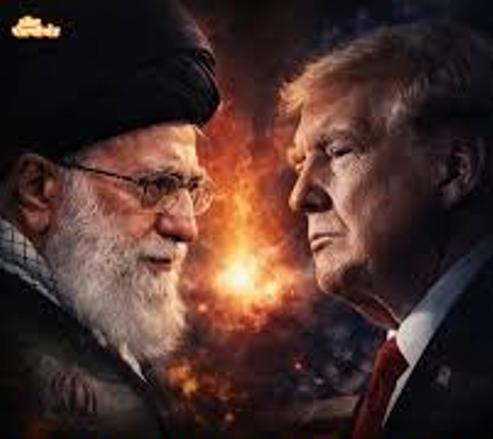
Both sides declared victory. But their main disputes remained unresolved, with Washington and Tehran sticking to competing demands for a potential peace deal that could shape the Middle East for generations.
Pakistani Prime Minister Shehbaz Sharif said he had invited Iranian and U.S. delegations to meet in Islamabad on Friday for what would be the first official peace talks since the war began, and that Iran’s president had confirmed it would attend.
U.S. Vice President JD Vance, seen as the potential head of an American delegation, said Trump had told negotiators to try to reach an agreement but stopped short of confirming talks at a specific time or place.
IRAN’S RULING ESTABLISHMENT SURVIVES
The ceasefire is subject to Iran’s agreement to pause its blockade of oil and gas passing through the strait, Trump said. Ships had yet to begin crossing by Wednesday afternoon, but Iran’s foreign minister, Abbas Araqchi, said Tehran would cease counter-attacks and provide safe passage through the waterway if attacks against it stopped.
The strait typically handles about one-fifth of global oil and liquefied natural gas shipments. News of the deal, and the prospect that the worst disruption to global energy markets in history could finally end, caused a sharp fall in oil prices and a surge in share markets around the world.
Crowds took to the streets of Iran overnight to celebrate, waving Iranian flags and burning flags of the United States and Israel. But there was also wariness that a deal would not hold.
“Israel will not allow diplomacy to work and Trump might change his view tomorrow. But at least we can sleep tonight without strikes,” Alireza, 29, a government employee in Tehran, told Reuters by phone.
The line charts show the movement of US gasoline price, gold price, dollar index and world stocks since January 2026.
The ceasefire suspends the war launched on February 28 by Trump and Israeli Prime Minister Benjamin Netanyahu, who had announced they aimed to prevent Iran from projecting force beyond its borders, end its nuclear programme and create conditions for Iranians to topple their rulers.
Trump told the French news agency AFP that the ceasefire represented a “total and complete victory” and said on Truth Social that the U.S. had achieved its military objectives.
But the war has yet to deprive Iran either of its stockpile of near-weapons-grade highly enriched uranium or its ability to hit its neighbours with missiles and drones. The clerical leadership, which faced a mass uprising months ago, withstood the superpower onslaught with no sign of domestic opposition.
Item 1 of 7 A man shouts slogans as people gather after a two-week ceasefire in the Iran war was announced, in Tehran, Iran, April 8, 2026. Majid Asgaripour/WANA (West Asia News Agency) via REUTERS
And Tehran’s newly proven ability to cut off Gulf energy supplies, despite the massive U.S. military presence built across the region over decades, could reshape the power dynamics of the Gulf for years.
“The enemy, in its unjust, illegal and criminal war against the Iranian nation, has suffered an undeniable, historic and crushing defeat,” Iran’s Supreme National Security Council said in a statement.
Netanyahu’s office said Israel supported the decision to suspend strikes on Iran for two weeks. But the agreement is likely to be seen as a blow for the Israeli leader, who had repeatedly said he wanted Iran’s rulers to fall.
“There has never been such a diplomatic disaster in all our history,” said opposition politician Yair Lapid. Yair Golan, a former Israeli military deputy chief of staff, called the outcome a “complete failure that endangered Israel’s security”.
“The nuclear programme was not destroyed. The ballistic threat remains. The regime is still intact and is even emerging from this war stronger,” he wrote on X.
ISRAEL’S ATTACKS ON LEBANON CONTINUE
Shipping firms said they would need further assurances of safety before sailing. “Any decision to transit the Strait of Hormuz will be based on continuous risk assessments, close monitoring of the security situation, and available guidance from relevant authorities and partners,” said container shipper Maersk.
The agreement did not halt Israel’s parallel campaign in Lebanon, which it invaded in March in pursuit of the Iran-aligned Hezbollah militia.
The Lebanese state news agency NNA reported continued Israeli strikes across southern Lebanon, including artillery shelling and a dawn air strike on a building near a hospital that killed four people. Israel’s military issued repeated urgent warnings to residents that it planned to attack the city of Tyre in southern Lebanon.
A senior Lebanese official told Reuters that Lebanon had received no information on its inclusion in the ceasefire, and had not been involved in talks.
If peace talks open on Friday in Islamabad as announced, they will begin with the main demands of the warring sides unresolved. Washington has presented its demands in a 15-point plan, while Iran has responded with a 10-point plan of its own.
In a post overnight, Trump acknowledged receiving the Iranian plan and called it “a workable basis to negotiate”, which Iran’s powerful security council said amounted to accepting its terms in principle. Those include lifting all sanctions, compensating Iran for damage and leaving it in control of the strait.
An Israeli official said senior Trump administration officials had assured Israel that they would insist on previous conditions, such as the removal of Iran’s nuclear material, a halt to enrichment and the elimination of ballistic missiles.
Hossein Shariatmadari, editor-in-chief of Kayhan, a newspaper closely associated with late supreme leader Ayatollah Ali Khamenei, derided the ceasefire in an editorial, saying “compromise and negotiation are a gift to the enemy”.
Reuters
For advert placement, events coverage, media consultancy, placement of publications and further inquiries please WhatsApp 2348023773039 or email: labakevwe@yahoo.com