



By Azuh Amatus
LAGOS MARCH 27TH (NEWSRANGERS)-The ongoing tensions and intermittent conflicts in the Middle East have once again exposed Nigeria’s fragile dependence on external forces for its energy stability.
Each time there is a geopolitical shake-up in that volatile region, the ripple effects travel swiftly across continents, eventually landing heavily on the shoulders of ordinary Nigerians.
But beyond the predictable global oil price surge lies a more troubling domestic reality, the arbitrary and often opportunistic hike in petrol prices by local marketers.
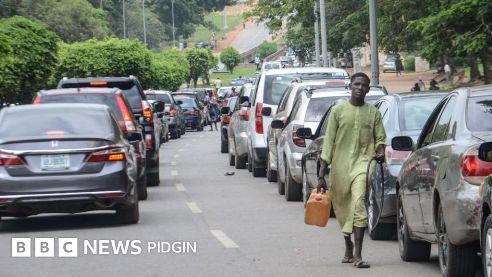
I was livid after buying a litre of petrol at N1,370, on my way to the office yesterday.
I later learnt most filling stations across Nigeria are already selling at N1,400 and even more.
Who is protecting Nigerians from these seemingly unchecked price manipulations?
Nigeria, paradoxically one of the world’s largest crude oil producers, remains heavily reliant on imported refined petroleum products.
This structural weakness has created a fertile ground for exploitation.
Whenever crude oil prices rise globally due to instability in the Middle East, Nigerian marketers waste no time in adjusting pump prices upward, often beyond what can be reasonably justified by actual cost implications.
This is pure wickedness!
In theory, a deregulated petroleum sector should encourage competition, efficiency, and fair pricing.
However, in practice, Nigeria’s version of deregulation appears skewed.
The absence of strong regulatory oversight has allowed some greedy marketers to operate with impunity, setting prices that reflect profit maximization rather than fairness or economic sensitivity.
For the average Nigerian, petrol is not a luxury, it is a lifeline.
From transportation to electricity generation, fuel powers nearly every aspect of our daily lives.
Thus, any arbitrary increase in petrol prices triggers a chain reaction.
Transport fares skyrocket, food prices rise and the cost of living becomes even more unbearable.
In a country already grappling with inflation and economic hardship, these hikes deepen the crisis.
Painfully, successive governments have often justified price increases as inevitable consequences of global market realities.
While there is some truth to this, it cannot fully excuse the lack of protective mechanisms for citizens.
Other oil-producing nations have implemented strategic buffers, such as local refining capacity, price stabilization funds or targeted subsidies, to cushion their populations from external shocks.
Nigeria, unfortunately, is still struggling to get these basics right.
The failure to fully operationalize local refineries has been a long-standing issue.
Despite enormous investments running into billions and repeated promises, Nigeria continues to export crude oil and import refined products at higher costs.
This cycle not only weakens the naira but also exposes the country to international price volatility.
If local refining were efficient and sufficient, the direct impact of Middle East crises on Nigerian fuel prices would be significantly reduced.
Moreover, regulatory agencies must rise to the occasion.
Monitoring pricing patterns, ensuring transparency in cost structures and sanctioning exploitative practices should not be optional responsibilities, they are essential duties.
Without firm oversight, deregulation becomes a euphemism for disorder and corruption.
Civil society organizations, consumer protection groups and the media also have critical roles to play.
By demanding transparency and holding both government and marketers accountable, they can amplify the voices of ordinary Nigerians who constantly bear the brunt of these price hikes.
Ultimately, the solution lies in a combination of structural reform and political will.
Nigeria must prioritize energy independence through functional refineries, encourage genuine competition in the downstream sector and strengthen regulatory frameworks to prevent abuse.
The Middle East may continue to experience conflicts beyond Nigeria’s control, but the suffering of Nigerians due to petrol price hikes is largely a domestic issue, one that can and should be addressed internally and urgently.
Until decisive action is taken, the question will persist: in a nation so richly endowed with oil, why are its citizens left at the mercy of both distant wars and buccaneers masquerading as marketers?
The answer and the responsibility rest squarely with those in power, especially at the centre.
Azuh Amatus, a multiple award-winning journalist and member of the Nigerian Guild of Editors, is the publisher of DAYLIGHT, the leading online newspaper. 08023380008
For media advert placement, events coverage, media consultancy, placement of publications and further inquiries please WhatsApp 2348023773039 or email: labakevwe@yahoo.com